

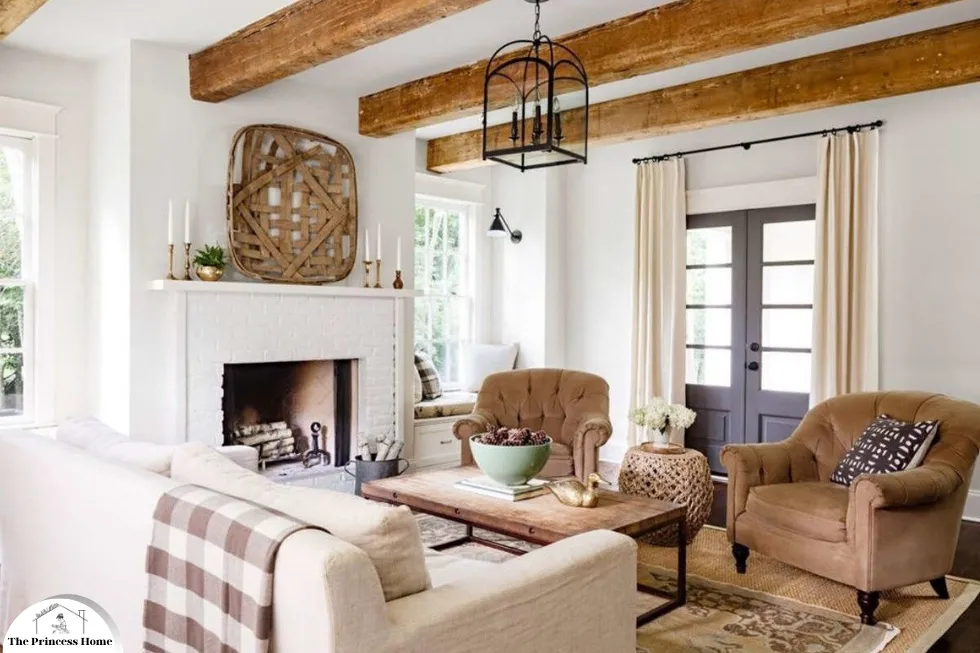
The farmhouse style is a timeless and inviting design aesthetic that has gained immense popularity in recent years. Rooted in the charm of rural life, farmhouse style embodies warmth, simplicity, and a connection to the past. This decor style seamlessly combines rustic elements with modern touches, creating a welcoming and cozy ambiance in any home.
If you’re looking to infuse your living space with farmhouse charm, this article will guide you through the best ways to achieve that rustic yet elegant look.
1**.Color Palette
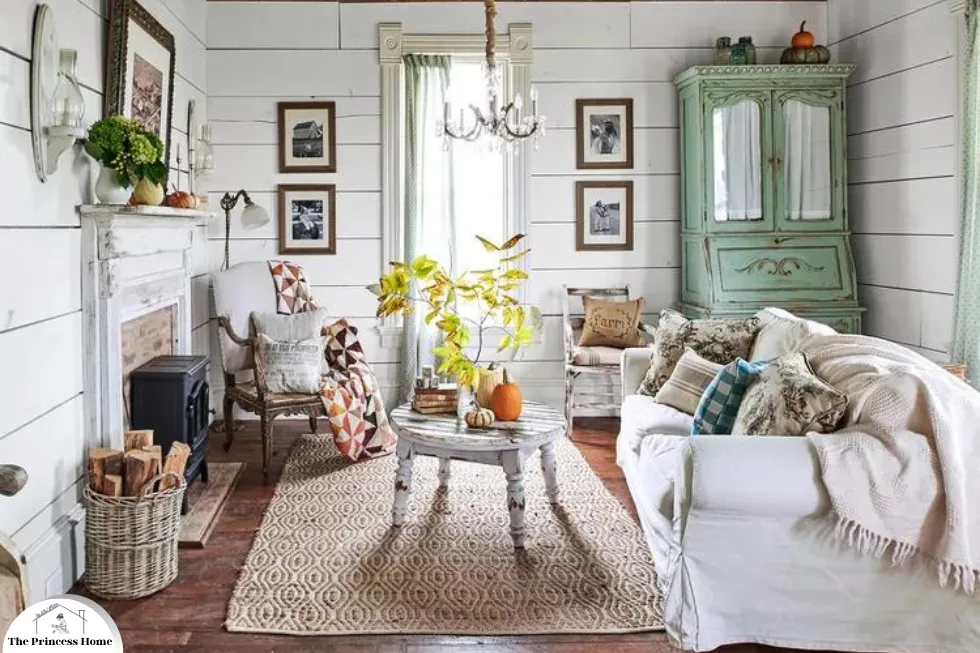
One of the key elements of the farmhouse style is a soothing and neutral color palette. Paint your walls in soft shades of whites, creams, and pastels, creating a backdrop that allows other farmhouse elements to shine. Earthy tones, such as muted greens and blues, can also be incorporated to add depth to your space.
Here’s a suggested color palette for achieving a farmhouse style:
1.Soft White: A warm, creamy white like “Antique White” or “Swiss Coffee” for a timeless backdrop.
2.Cream: A soft, buttery cream shade such as “Navajo White” or “Creamy White” to add warmth and coziness.
3.Pastel Blue: A subtle pastel blue like “Powder Blue” or “Sky Blue” to bring in a hint of color reminiscent of clear skies and open spaces.
4.Muted Green: A muted green hue like “Sage Green” or “Soft Moss” for a touch of nature-inspired tranquility.
Earthy Taupe: A neutral taupe shade like “Taupe Gray” or “Warm Stone” to ground the space and complement other colors.
5.Soft Gray: A light, airy gray such as “Pale Smoke” or “Silver Sage” to add depth without overwhelming the palette.
These colors work harmoniously together to create a soothing and inviting atmosphere.
2**.Reclaimed Wood
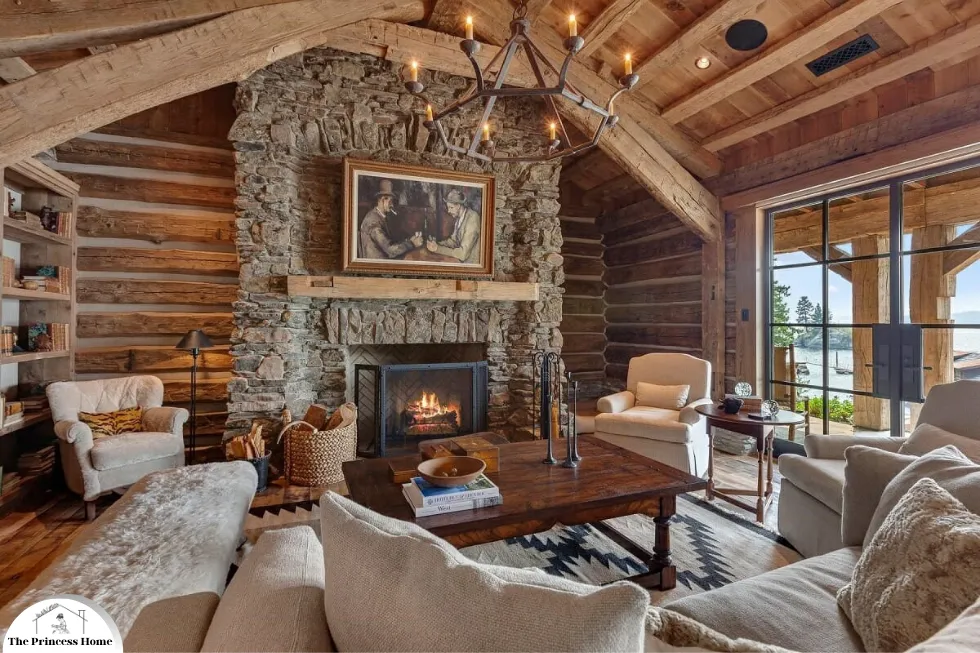
The extensive use of reclaimed wood is a hallmark of farmhouse decor. Whether it’s in the form of rustic wooden beams, distressed hardwood floors, or shiplap wall paneling, incorporating reclaimed wood elements instantly adds warmth and authenticity to your home. Consider barn doors, floating shelves, or a farmhouse-style dining table to introduce this feature.
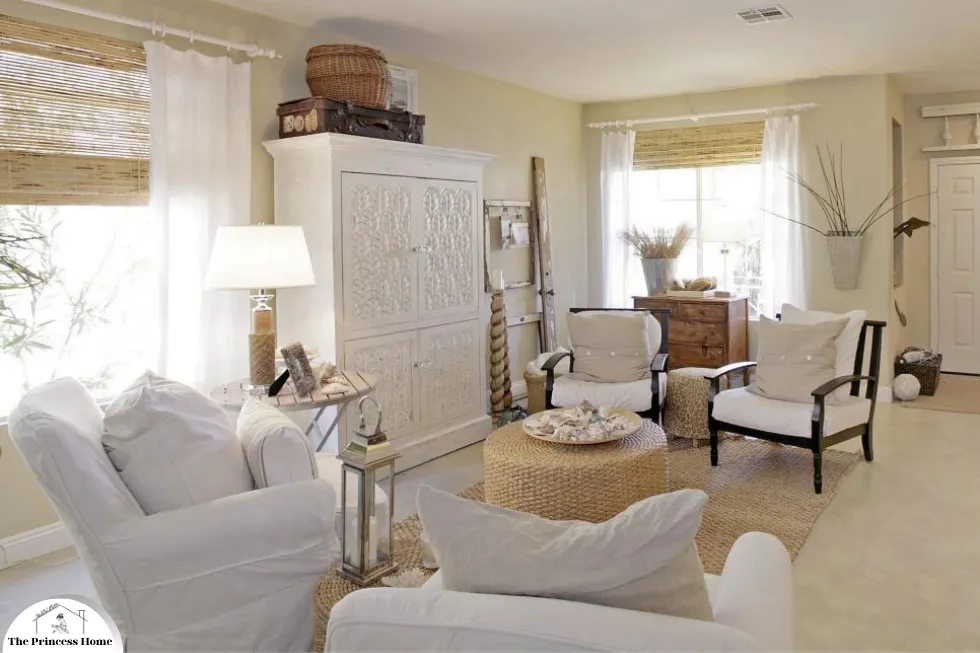
3.Distressed Finishes
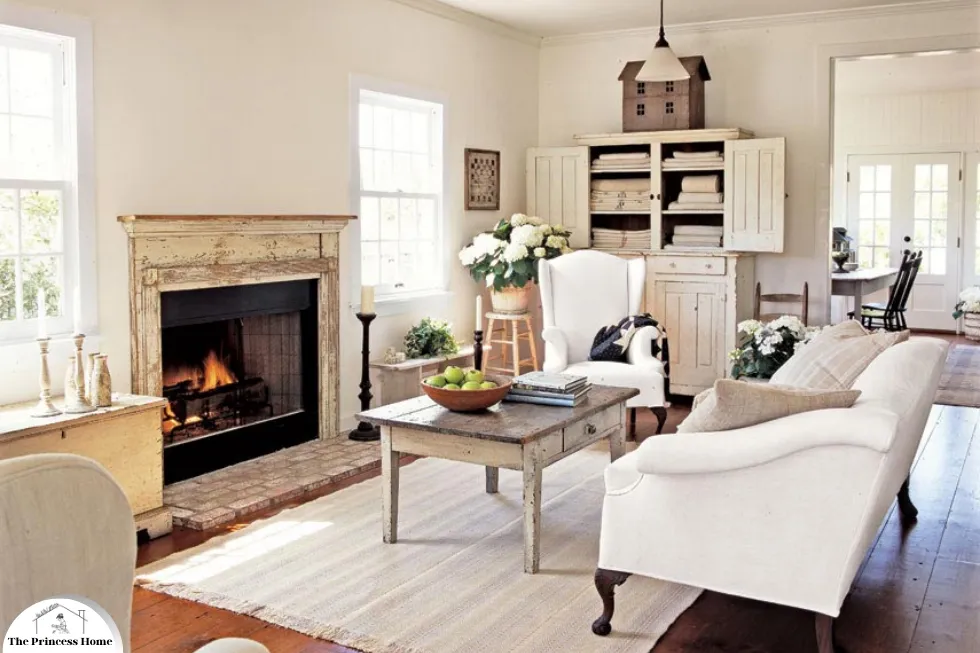
Incorporate the allure of farmhouse style by embracing its imperfect charm through distressed finishes. Choose furniture and decorations with weathered or worn-out looks to evoke a sense of well-loved authenticity. Elements like cabinets boasting chipped paint, antique dressers, and vintage signage contribute to the rustic appeal of the farmhouse aesthetic, infusing your space with character and warmth reminiscent of simpler times.
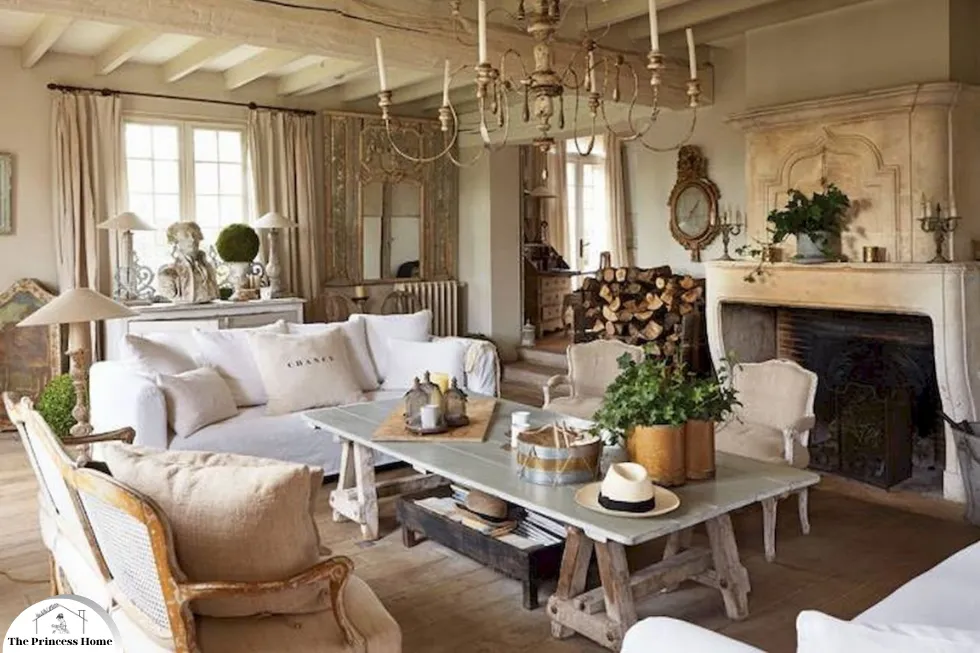
4**.Farmhouse Furniture
Farmhouse furniture embodies the essence of rural living, emphasizing simplicity and functionality. This style typically showcases clean lines, robust construction, and vintage-inspired elements. Key pieces such as Windsor chairs, trestle tables, and ladder-back chairs are fundamental in capturing the farmhouse aesthetic. Whether it’s a cozy dining room or a rustic living space, farmhouse furniture adds warmth and charm to any home, evoking a sense of nostalgia and timeless appeal.
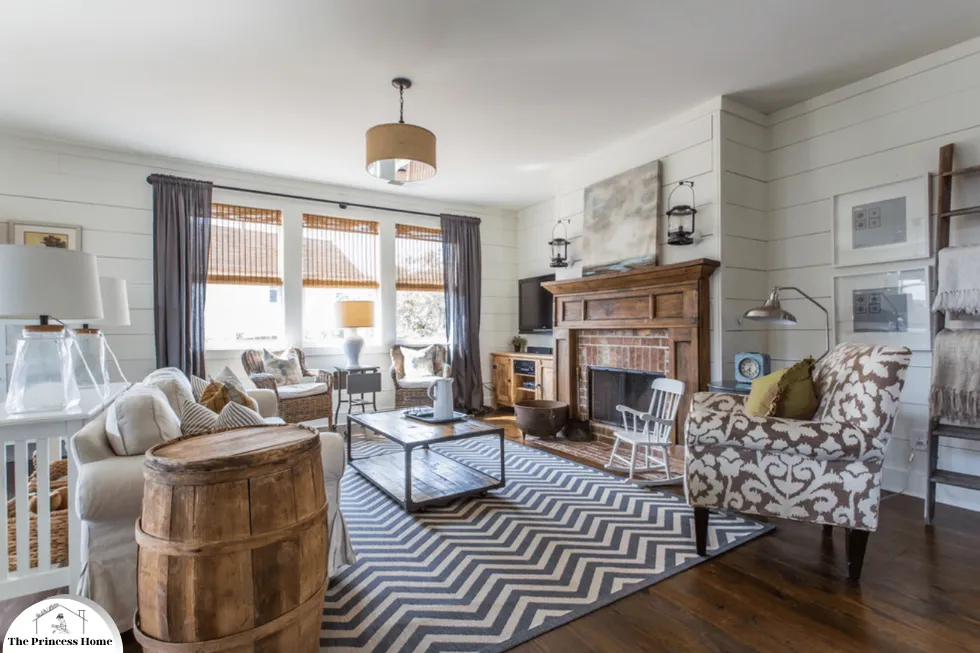
5**.Vintage Accents
For a personal touch in your farmhouse decor, explore antique stores and flea markets to discover unique vintage accents. Incorporating items like old milk jugs, mason jars, or vintage farm tools as decorative elements adds character and nostalgia to your home. Each piece not only carries its own story from the past but also adds an authentic charm to your living space, creating a warm and inviting atmosphere that feels timeless and unique.
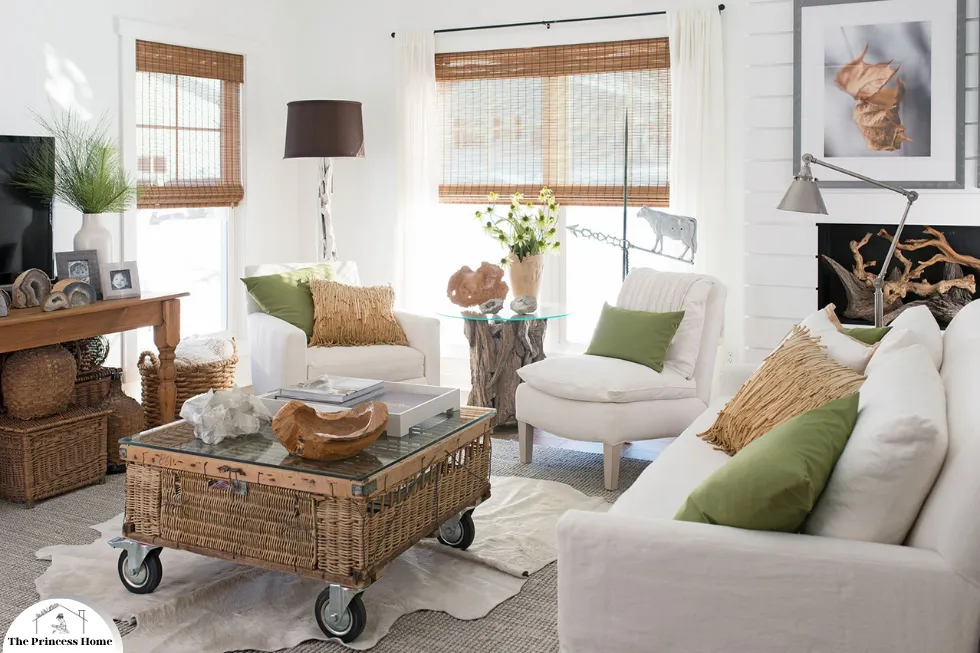
6**.Textiles and Fabrics
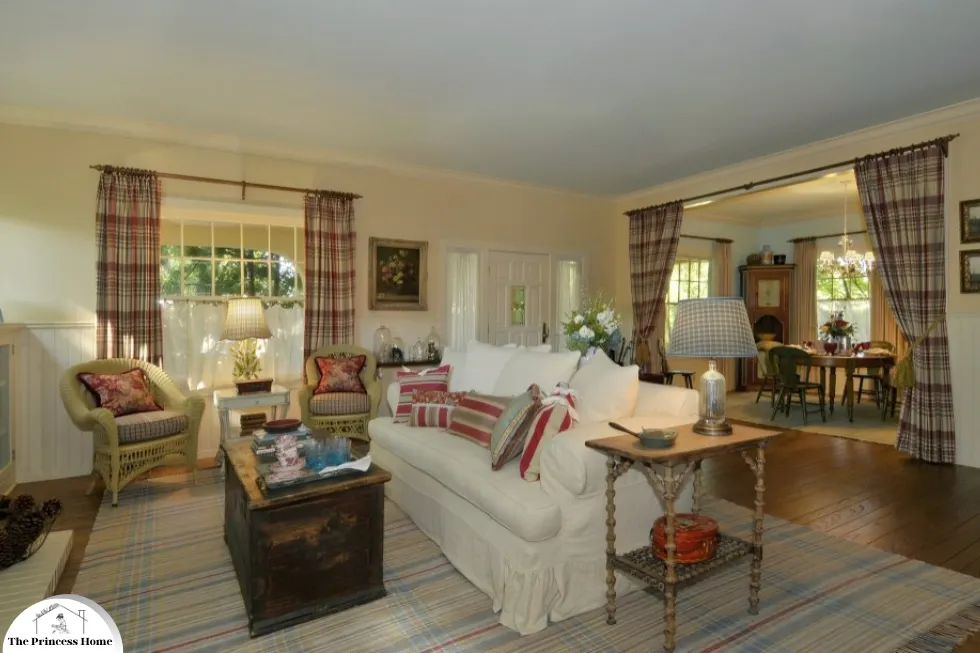
To infuse your farmhouse atmosphere with comfort, prioritize soft and cozy textiles. Integrate natural fabrics such as linen, cotton, and burlap throughout your decor. These materials work beautifully for curtains, tablecloths, throw pillows, and upholstered furniture, adding a tactile richness to your space. Embrace classic patterns like florals and plaids to enhance the farmhouse ambiance, bringing a touch of nostalgia and warmth to every corner of your home.
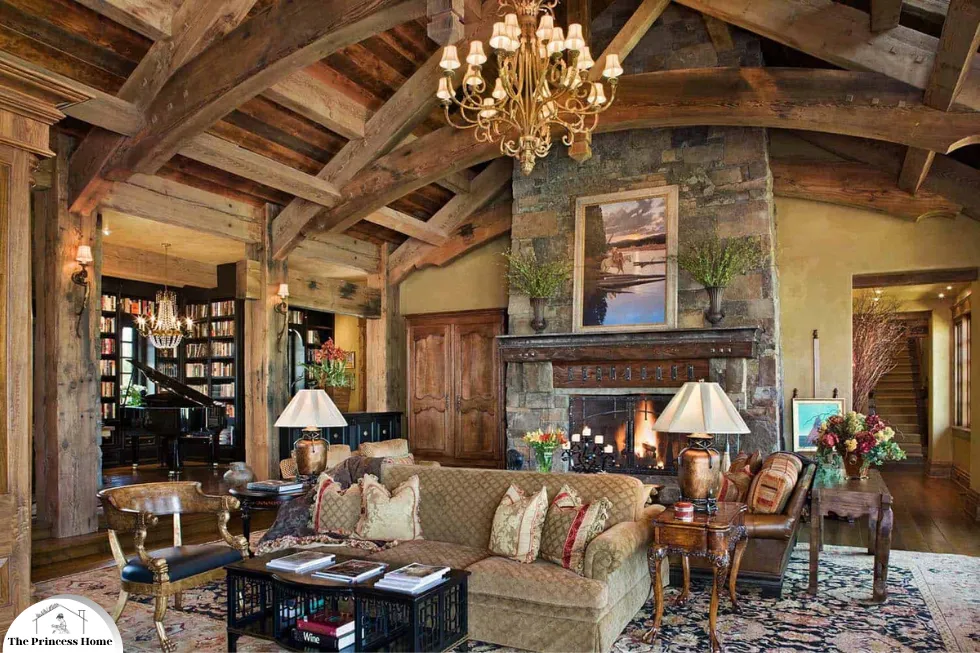
7**.Farmhouse Lighting
Selecting the right lighting fixtures can greatly enhance the farmhouse ambiance. Look for fixtures with wrought iron, distressed metal, or galvanized finishes. Mason jar pendant lights, lantern-style chandeliers, and vintage-inspired sconces can bring an authentic farmhouse feel to your home.
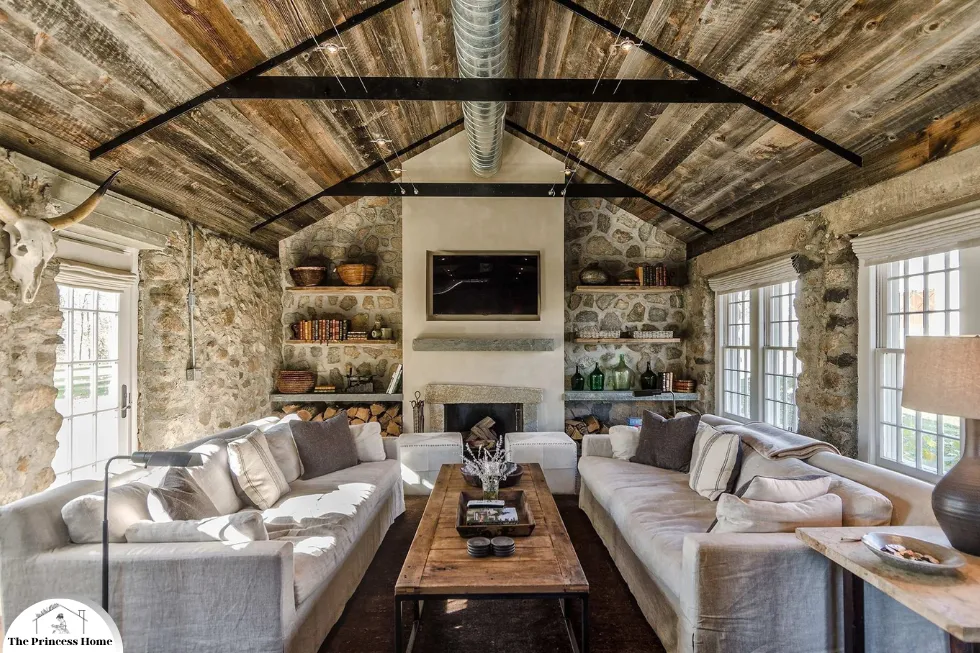
8.Open Shelving
Farmhouse kitchens often feature open shelving, allowing you to display your favorite dishes and kitchenware. Install open shelves made of reclaimed wood or rustic metal brackets to store and showcase your kitchen essentials.
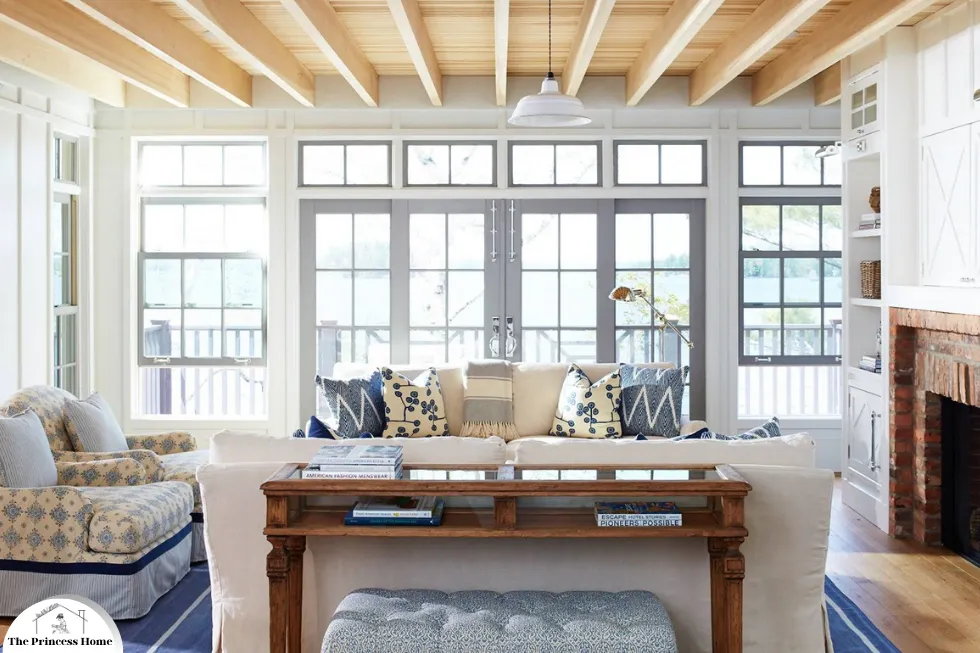
9**.Exposed Beams and Brick:
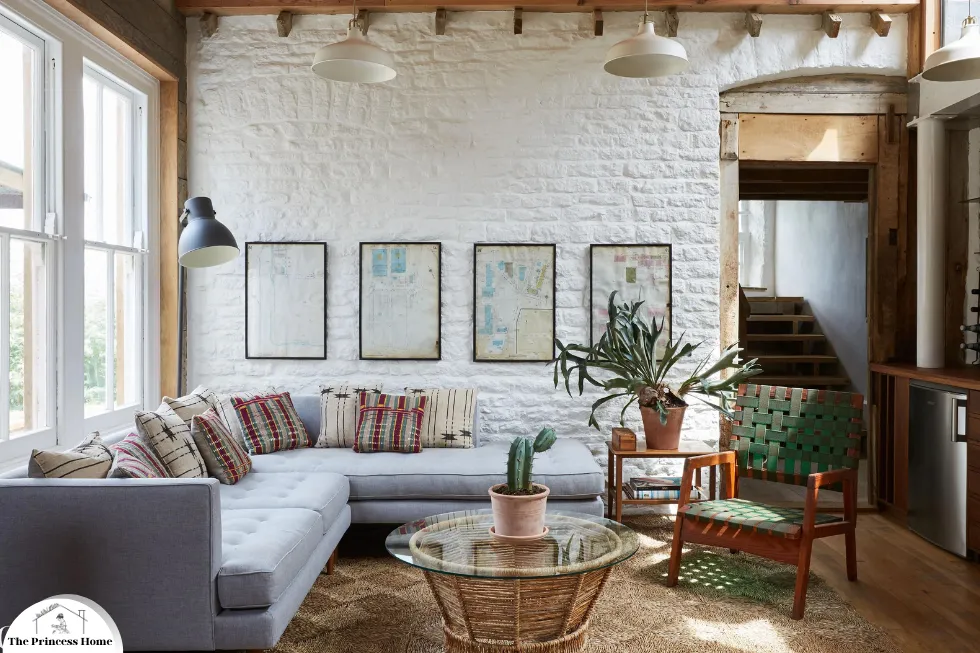
If your home has architectural features like exposed beams or brick walls, highlight them to enhance the rustic feel. Leave beams unpainted or consider whitewashing brick for a timeless look.
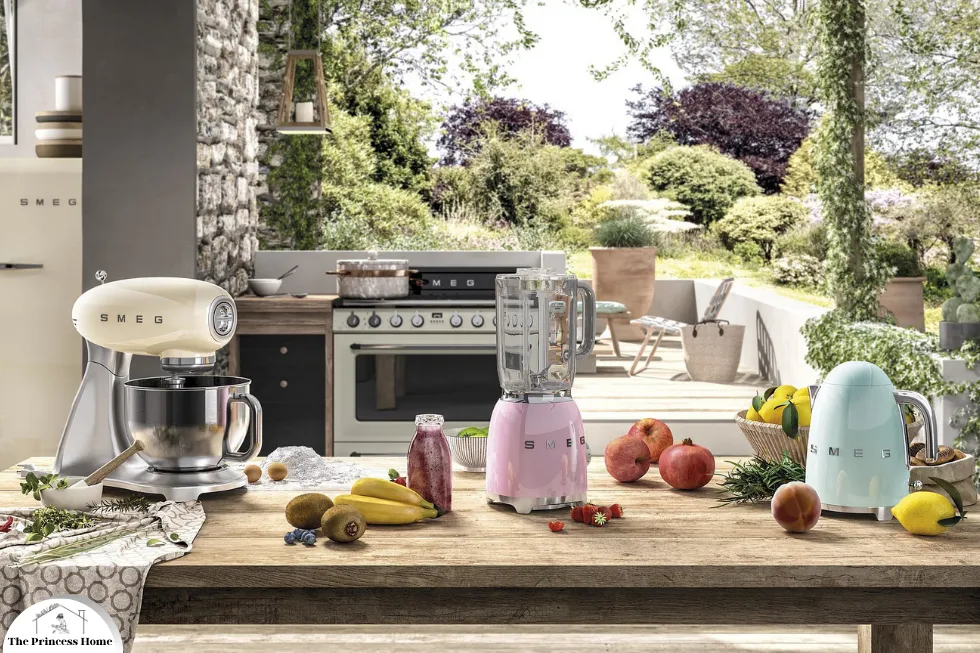
9**.Vintage Appliances
To complete your farmhouse kitchen, consider incorporating vintage-style appliances. Brands like Smeg offer retro-inspired refrigerators and ovens that blend modern convenience with classic design.
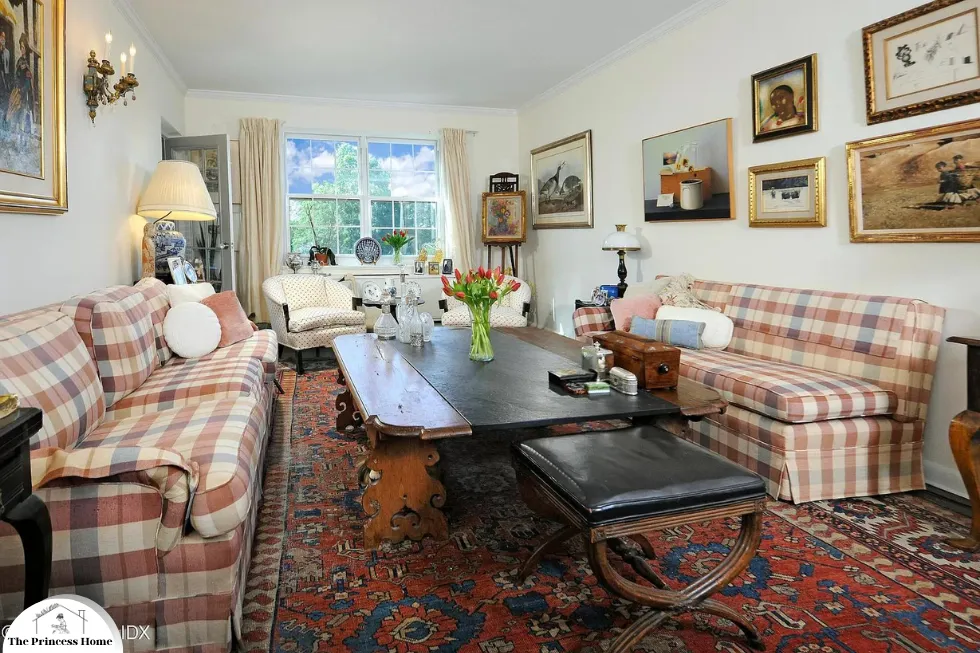
10**.Farmhouse Decor
Personalize your farmhouse style with meaningful decor items. Antique family photos, botanical prints, and rustic signs can add character to your space. Incorporate farmhouse-themed artwork and personal mementos to make your home uniquely yours. Farmhouse decor embodies a timeless charm that blends rustic simplicity with personal touches.
To infuse your farmhouse style with meaningful elements, consider these ideas:
Antique Family Photos: Display black-and-white or sepia-toned photographs of your ancestors in vintage frames. These photos not only add a historical touch but also evoke a sense of heritage and connection to the past.
Botanical Prints: Adorn your walls with botanical prints or pressed flowers in distressed frames. These nature-inspired accents bring a touch of the outdoors inside and complement the organic feel of farmhouse decor.
Rustic Signs: Hang wooden signs with hand-painted quotes or family mottos. Whether it’s a favorite saying or a meaningful message, these signs add warmth and personality to your space.
Farmhouse-Themed Artwork: Choose artwork that reflects rural life, such as landscapes, barns, or farm animals. Whether it’s a painting, print, or folk art piece, these artworks celebrate the simplicity and beauty of country living.
Personal Mementos: Incorporate personal mementos that tell your story and reflect your interests. This could be anything from vintage kitchen utensils passed down through generations to handmade quilts or pottery collected on travels.
By combining these elements, you can create a farmhouse-style space looks beautiful.
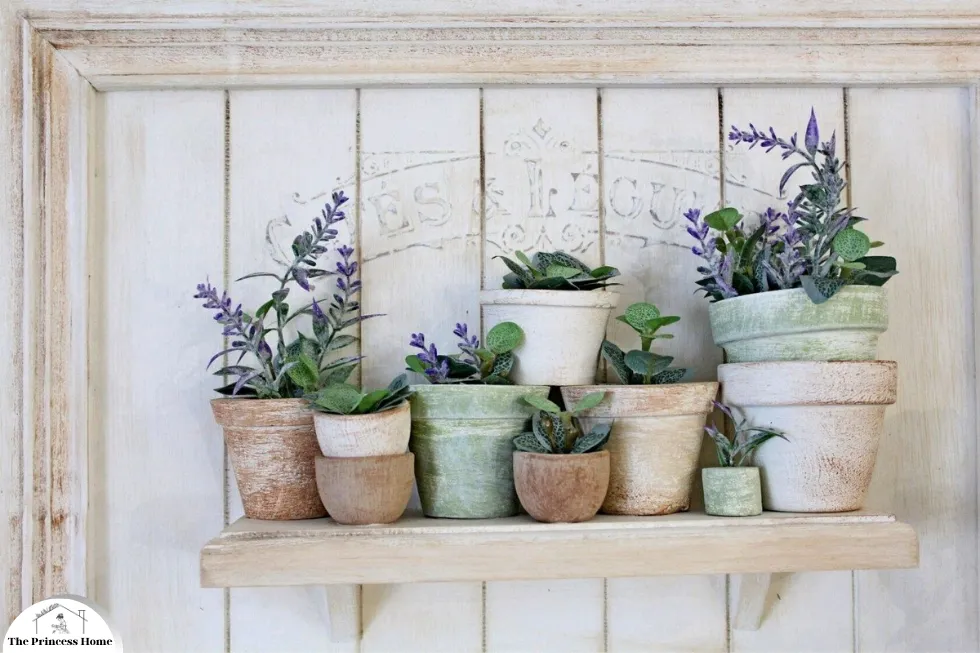
11**.Greenery
Incorporating greenery into your farmhouse decor is a hallmark of bringing the outdoors inside. Houseplants, fresh flowers, and herb gardens can infuse your space with life and vitality. Consider rustic planters and aged terracotta pots as charming vessels for displaying your greenery, adding natural beauty and a sense of tranquility to your home.
Certainly, let’s continue with more details on how to achieve the farmhouse style in different areas of your home and additional tips for perfecting the look:
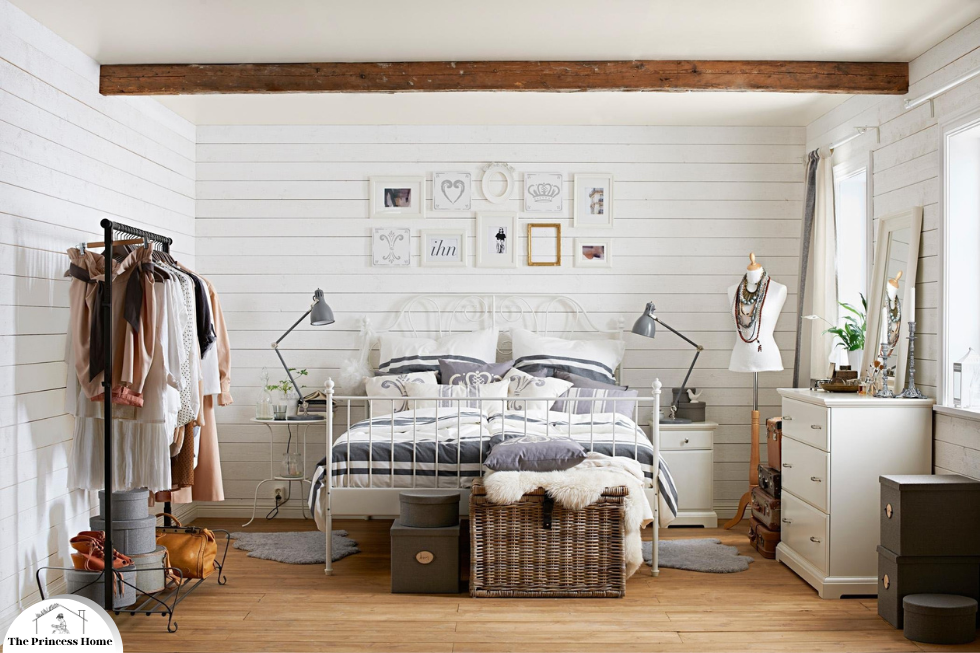
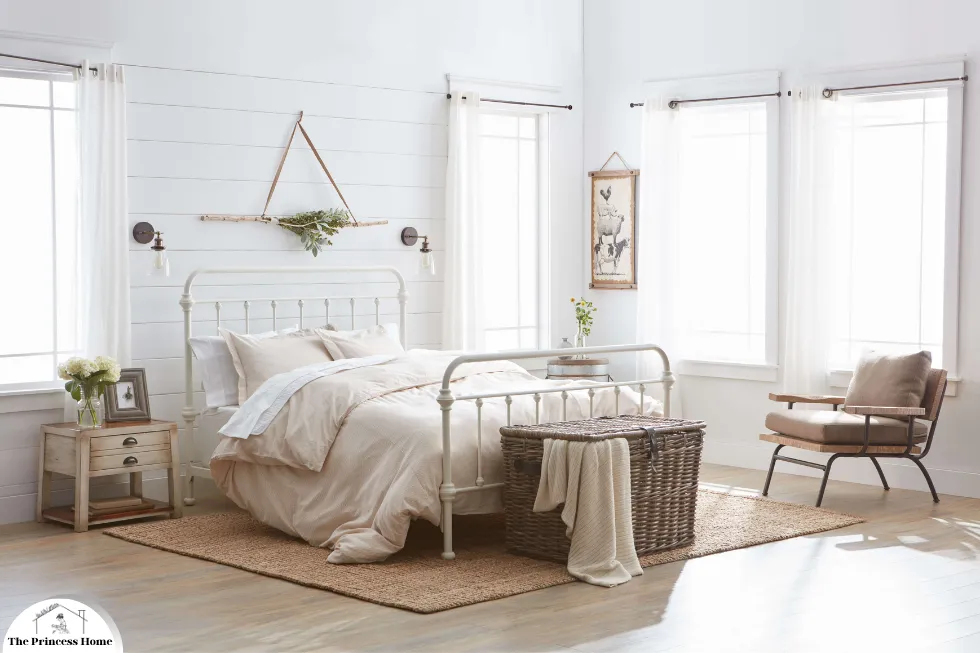
1**.Farmhouse Bedroom
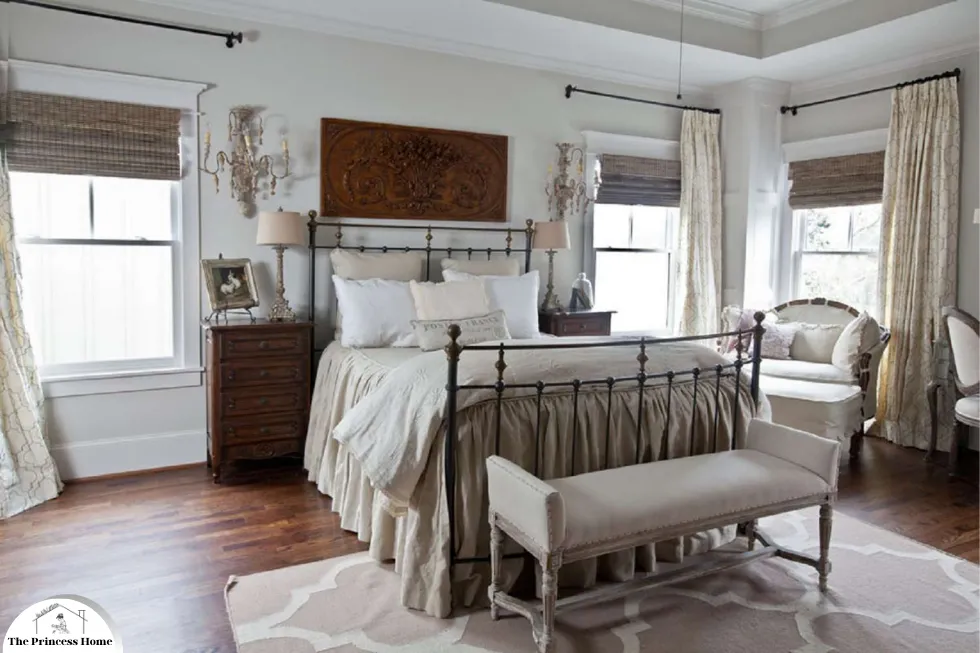
To create a cozy and inviting bedroom with farmhouse style, choose a four-poster or canopy bed with a distressed finish or a wrought-iron frame. Use vintage quilts, linen duvets, and fluffy down comforters for bedding.
Consider adding a simple, wooden bench at the foot of the bed. Hang rustic, hand-crafted signs or artwork above your headboard, and use mismatched antique nightstands for added character. A farmhouse bedroom exudes a cozy and inviting atmosphere with its rustic charm and vintage-inspired elements.
Here are some key features and design ideas to create a farmhouse-style bedroom:
1.Weathered Wood Furniture:
Choose furniture pieces made of weathered or distressed wood to add warmth and character to the room. This could include a wooden bed frame, bedside tables, and a dresser with a rustic finish.
2.Soft, Neutral Color Palette:
Stick to a soft and soothing color palette with shades of white, cream, beige, and soft pastels for the walls, bedding, and décor. These colors create a serene backdrop and enhance the cozy ambiance of the room.
3.Cozy Bedding:
Dress the bed with layers of soft and cozy bedding such as cotton or linen sheets, a quilt or duvet with a subtle pattern, and plenty of plush pillows and throw blankets for added comfort.
4.Vintage Accents:
Incorporate vintage accents and accessories to enhance the farmhouse aesthetic. This could include antique mirrors, vintage lamps, framed botanical prints, or old-fashioned alarm clocks.
5.Barn Doors or Sliding Doors:
If space allows, consider installing barn doors or sliding doors for the closet or bathroom entrance. These architectural elements add a touch of rustic charm and save space in the room.
6.Exposed Beams or Shiplap Walls:
If you’re renovating or building, consider exposing ceiling beams or installing shiplap paneling on the walls to add texture and visual interest to the room.
7.Natural Fiber Rugs:
Lay down a natural fiber rug such as jute, sisal, or seagrass to add warmth and texture to the bedroom floor. These rugs complement the farmhouse style and bring a touch of nature indoors.
8.Farmhouse-style Lighting:
Choose lighting fixtures with a farmhouse flair such as wrought iron chandeliers, vintage-inspired pendant lights, or rustic wall sconces to illuminate the space and add ambiance.
9.Fresh Flowers and Greenery:
Bring the outdoors inside by incorporating fresh flowers and greenery into your bedroom décor. Place a vase of seasonal blooms on the bedside table or hang eucalyptus branches on the wall for a natural touch.
10.Quilt or Patchwork Throw:
Drape a quilt or patchwork throw over a chair or at the foot of the bed to add color, pattern, and a cozy farmhouse vibe to the room.
By incorporating these design elements, you can create a farmhouse bedroom that is cozy.
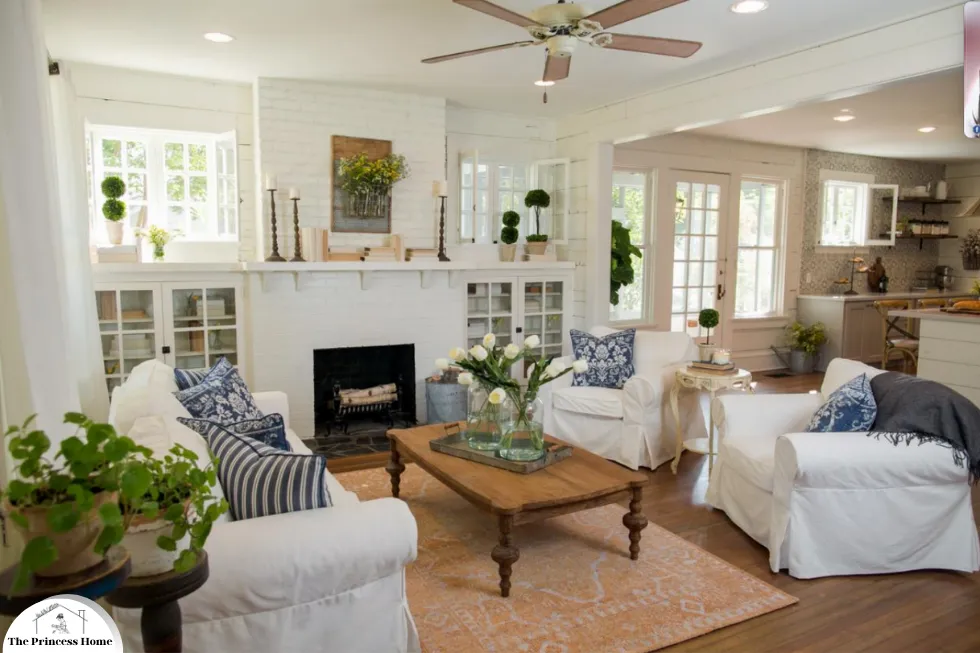
2**.Farmhouse Living Room
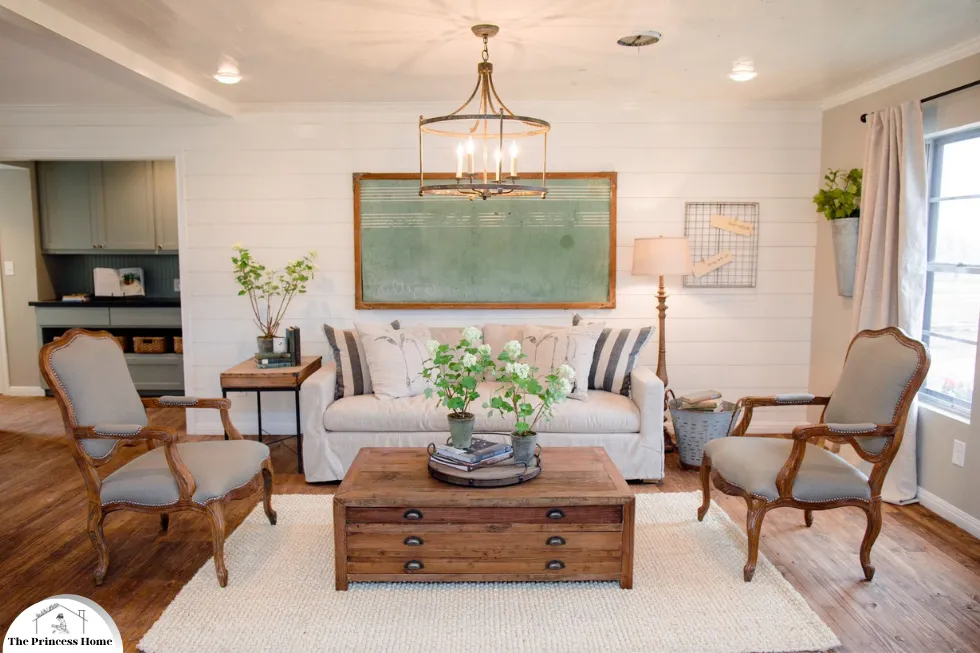
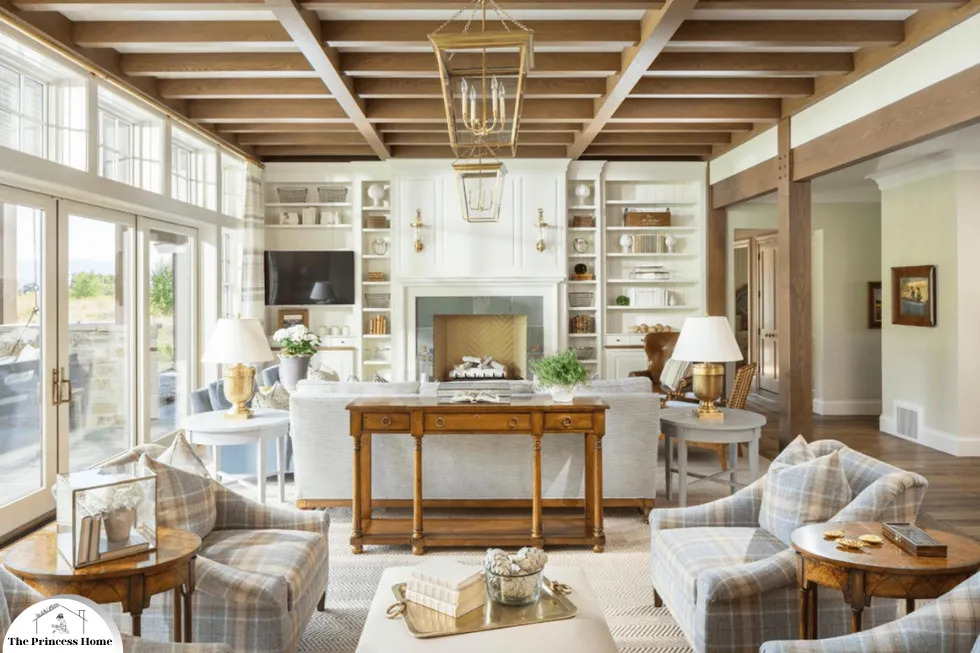
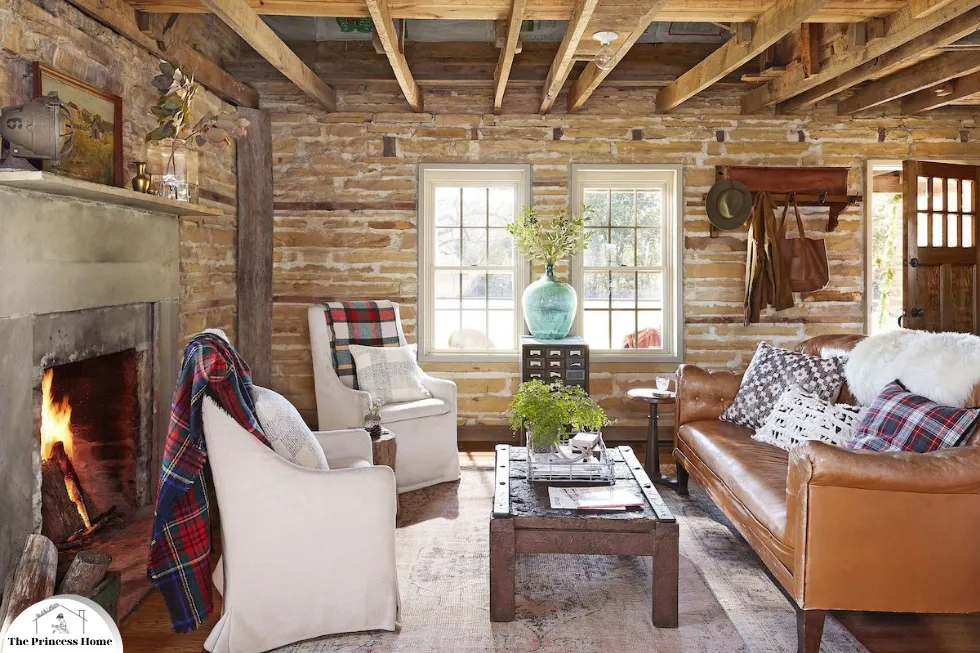
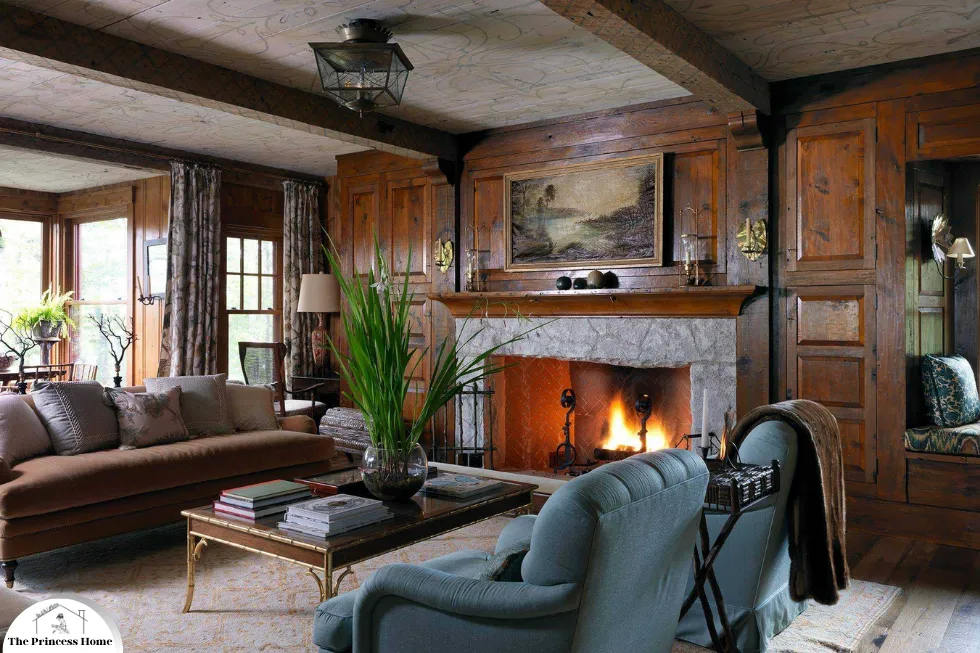
In the living room, embrace the comfort and warmth of the farmhouse style by incorporating oversized, plush sofas and chairs with neutral upholstery. Layer throw blankets and accent pillows for extra coziness. A large, distressed coffee table made from reclaimed wood or an old trunk can be a central piece.
Incorporate a gallery wall with a mix of family photos, vintage art, and decorative mirrors to add visual interest. A farmhouse living room exudes warmth, comfort, and rustic charm, creating a cozy space for relaxation and gatherings.
Here are some key elements and design ideas to create a farmhouse-style living room:
1.Comfortable Seating:
Choose comfortable seating options such as oversized sofas, plush armchairs, and upholstered ottomans. Look for furniture with slipcovers or linen upholstery for a relaxed and casual vibe.
2.Distressed Wood:
Incorporate distressed wood furniture pieces such as coffee tables, side tables, and entertainment centers to add texture and warmth to the room. Reclaimed wood or pieces with a weathered finish are perfect for achieving a rustic farmhouse look.
3.Neutral Color Palette:
Stick to a neutral color palette with soft shades of white, cream, beige, and gray for the walls, furniture, and decor. These colors create a serene backdrop and allow other elements in the room to stand out.
4.Cozy Textiles:
Layer the space with cozy textiles such as throw blankets, knit or faux fur pillows, and area rugs to add warmth and softness. Look for natural materials like cotton, wool, and jute for a tactile touch.
5.Farmhouse-style Lighting:
Incorporate lighting fixtures with a farmhouse flair such as wrought iron chandeliers, industrial-style pendant lights, or rustic table lamps. These fixtures add ambiance and enhance the farmhouse aesthetic of the room.
6.Natural Elements:
Bring the outdoors inside by incorporating natural elements such as exposed wooden beams, stone accents, or a fireplace with a stone surround. These features add character and authenticity to the farmhouse style.
7.Vintage Accents:
Add vintage accents and accessories to the room such as antique mirrors, distressed picture frames, or old-fashioned signage. These pieces add charm and personality to the space.
8.Farmhouse Decor:
Decorate the living room with farmhouse-inspired decor such as mason jar vases, galvanized metal buckets, and woven baskets. These accessories add a rustic touch and tie the room together.
9.Statement Piece:
Incorporate a statement piece of furniture or decor item to serve as a focal point in the room. This could be a reclaimed wood mantel, a large farmhouse-style clock, or a vintage-inspired area rug.
10.Personal Touches:
Add personal touches to the space with family photos, heirloom pieces, or DIY projects. These elements add warmth and make the room feel inviting and lived-in.
By incorporating these design elements, you can create a farmhouse living room that is cozy.
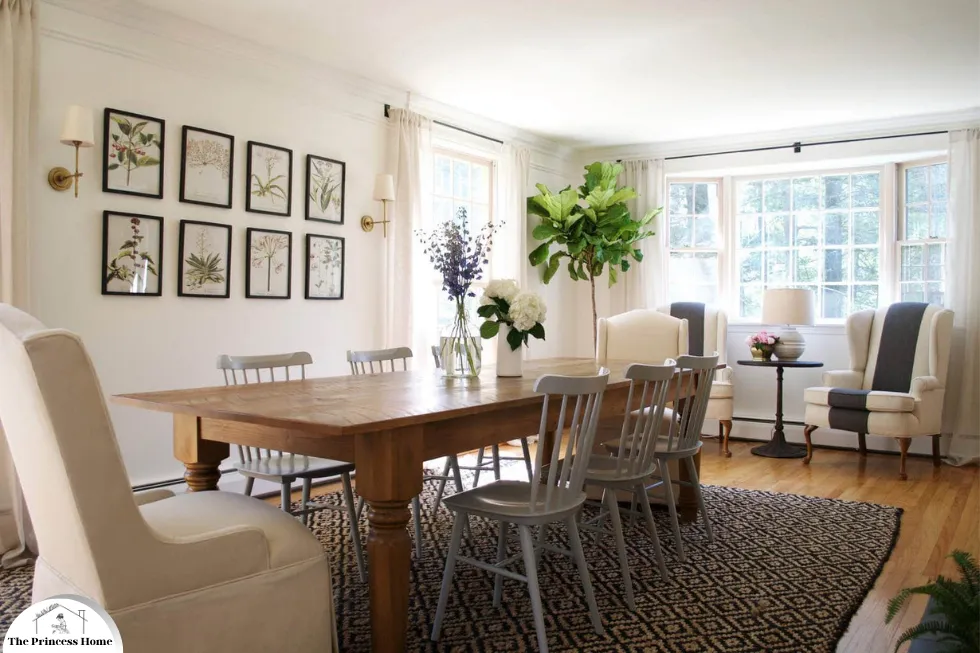
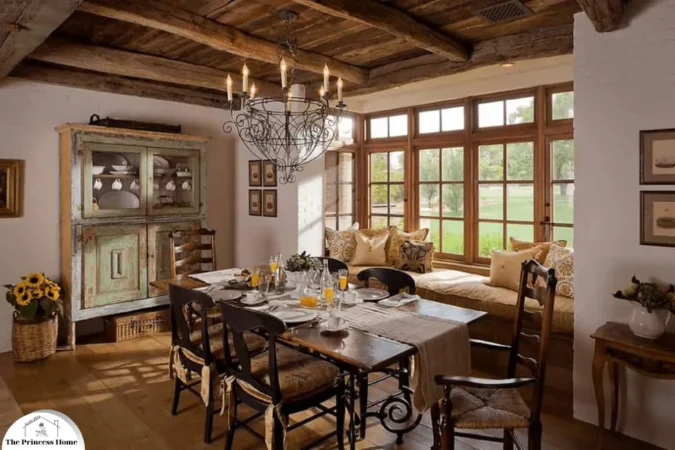
3**.Farmhouse Dining Room
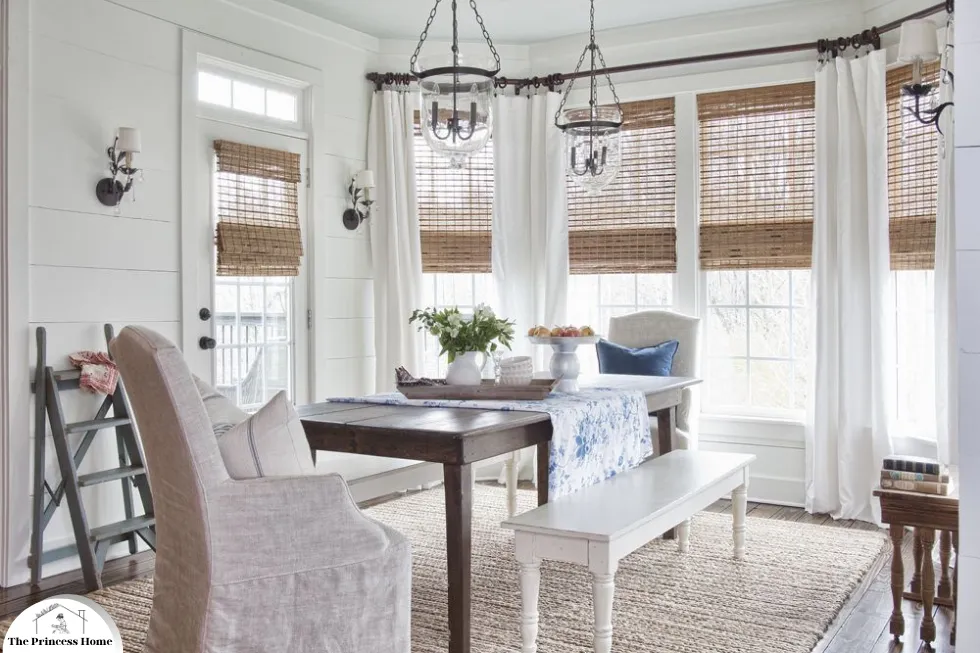
The dining room is a perfect place to showcase the farmhouse style. Invest in a large, sturdy farmhouse dining table with a distressed finish, often made from reclaimed wood. Pair it with a set of mismatched chairs or benches for a charming, eclectic look. A chandelier with a distressed metal or wood finish can be a stunning focal point.
Create a rustic sideboard with open shelving to display your dinnerware and collectibles. A farmhouse dining room combines rustic charm with comfort, creating a welcoming space for gatherings and meals.
Here are some key elements and design ideas to create a farmhouse-style dining room:
1.Farmhouse Dining Table:
Choose a sturdy farmhouse dining table as the centerpiece of the room. Look for a table made of reclaimed wood or with a distressed finish for an authentic farmhouse look. A large, rectangular table is ideal for accommodating family and guests.
2.Mismatched Chairs:
Mix and match dining chairs for a relaxed and eclectic vibe. Consider using a combination of wooden chairs, upholstered armchairs, and bench seating to add visual interest and create a cozy atmosphere.
3.Natural Materials:
Incorporate natural materials such as wood, stone, and metal into the dining room decor. Exposed wooden beams, stone accent walls, and wrought iron light fixtures add texture and warmth to the space.
4.Neutral Color Palette:
Stick to a neutral color palette with soft shades of white, cream, beige, and gray for the walls, furniture, and decor. These colors create a timeless backdrop and allow other elements in the room to shine.
5.Farmhouse-style Lighting:
Choose lighting fixtures with a farmhouse flair such as chandeliers with wooden or metal accents, pendant lights with glass shades, or industrial-style wall sconces. These fixtures add ambiance and enhance the rustic charm of the dining room.
6.Vintage Accents:
Decorate the dining room with vintage accents and accessories such as antique dinnerware, distressed wooden crates, and decorative galvanized metal buckets. These pieces add character and personality to the space.
7.Farmhouse Decor:
Incorporate farmhouse-inspired decor elements such as mason jar centerpieces, linen table runners, and woven placemats. These accessories add a rustic touch and tie the room together.
8.Natural Light:
Maximize natural light in the dining room by choosing window treatments that allow plenty of sunlight to filter in. Consider installing French doors or large windows to create a seamless connection to the outdoors.
9.Cozy Textiles:
Layer the dining room with cozy textiles such as linen or cotton curtains, woven area rugs, and upholstered seat cushions. These soft furnishings add warmth and comfort to the space.
10.Greenery:
Bring the outdoors inside by incorporating fresh flowers, potted herbs, or a small indoor garden into the dining room decor. These natural elements add color, freshness, and life to the space.
By incorporating these design elements, you can create a farmhouse dining room that is inviting, charming.
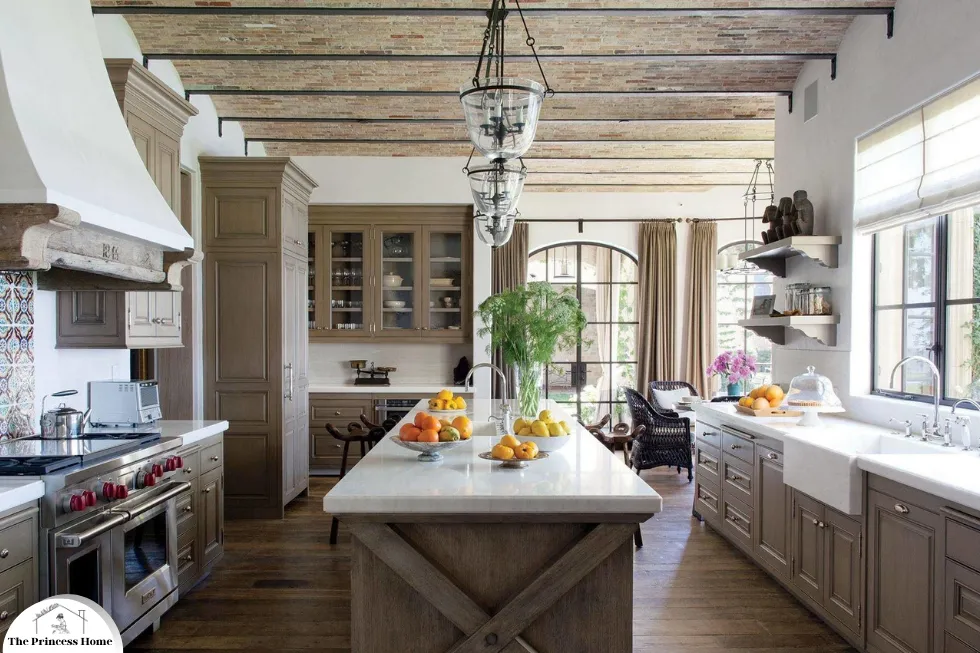
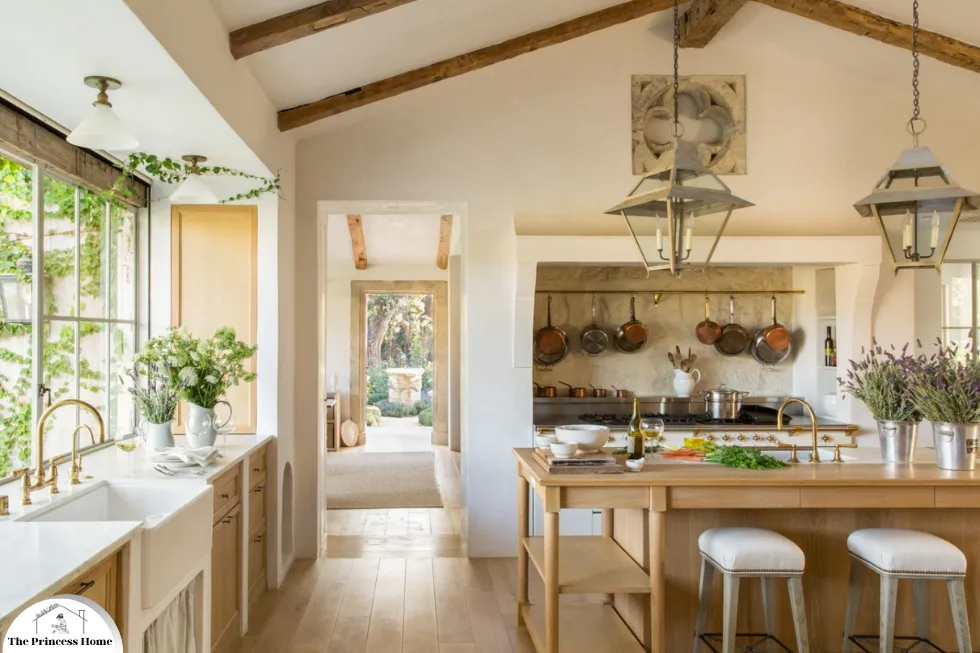
4**.Farmhouse Kitchen
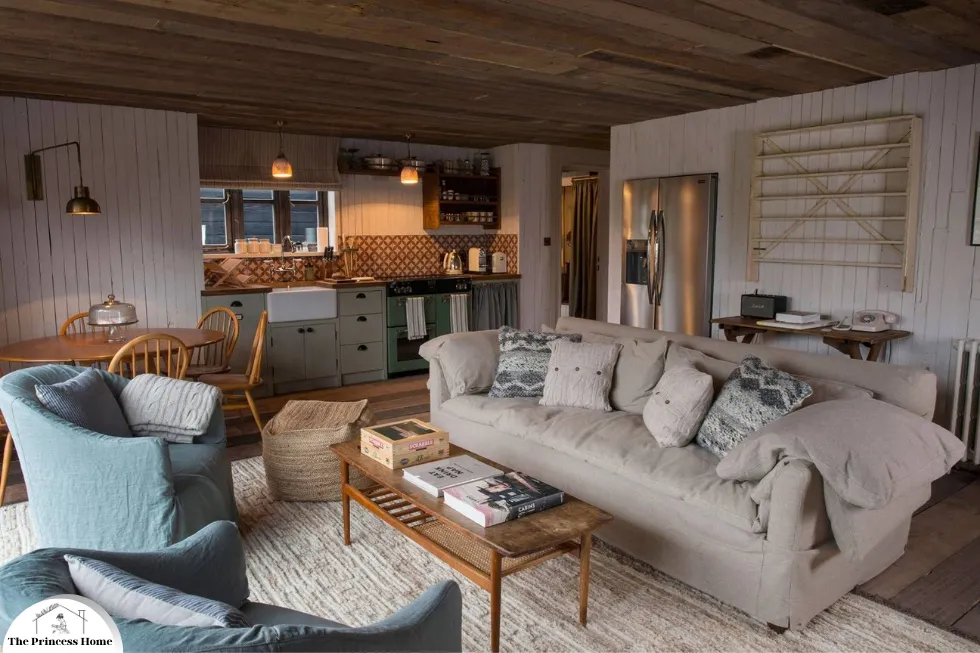
The kitchen is often the heart of the home, and achieving the farmhouse style here is a must. Install a farmhouse sink with an apron front, which is a signature feature. Open shelving, as mentioned earlier, can display your favorite dishes and glassware. White or cream-colored cabinets with simple, shaker-style doors and black or antique brass hardware can complete the look.
Incorporate a kitchen island with a butcher block countertop for added functionality and rustic charm. A farmhouse kitchen is a cozy and inviting space that combines rustic charm with modern convenience.
Here are some key elements and design ideas to create a farmhouse-style kitchen:
1.Farmhouse Sink:
A farmhouse sink, also known as an apron-front sink, is a quintessential feature of farmhouse kitchens. Choose a large, deep sink made of durable materials such as fireclay or stainless steel for a practical yet charming focal point.
2.Wooden Cabinetry:
Opt for wooden cabinetry with a distressed or weathered finish to add warmth and character to the kitchen. Open shelving can also be incorporated to showcase dishes, glassware, and decorative items.
3.Butcher Block Countertops:
Consider installing butcher block countertops for a rustic and functional work surface. The natural wood adds warmth and texture to the kitchen and provides a durable surface for food preparation.
4.Exposed Beams or Shiplap Walls:
Exposed wooden beams or shiplap paneling on the walls can add architectural interest and enhance the farmhouse aesthetic of the kitchen. You can paint the shiplap white for a clean and classic look or leave it natural for a more rustic vibe.
5.Vintage-inspired Appliances:
Choose appliances with a vintage-inspired design to complement the farmhouse style. For example, a retro-style refrigerator or a vintage-inspired range can add charm and nostalgia to the kitchen.
6.Farmhouse-style Lighting:
Install lighting fixtures with a farmhouse flair such as pendant lights with metal or glass shades, wrought iron chandeliers, or industrial-style wall sconces. These fixtures add ambiance and enhance the rustic charm of the kitchen.
7.Natural Elements:
Incorporate natural elements such as stone or brick accents, wooden ceiling beams, or a reclaimed wood kitchen island to add texture and warmth to the space. These features help create a cozy and inviting atmosphere.
8.Decorative Accents:
Decorate the kitchen with farmhouse-inspired accessories such as mason jar vases, vintage enamelware, and woven baskets. These decorative accents add charm and personality to the space.
9.Functional Storage:
Maximize storage space in the kitchen with built-in cabinets, drawers, and shelves. Consider incorporating pull-out pantry shelves, spice racks, and built-in wine racks for added convenience.
10.Cozy Seating Area:
Create a cozy seating area in the kitchen with a built-in banquette, a farmhouse-style dining table, or a collection of mismatched chairs. This space provides a comfortable spot for meals, homework, or casual conversations.
By incorporating these design elements, you can create a farmhouse kitchen that is both functional and stylish.
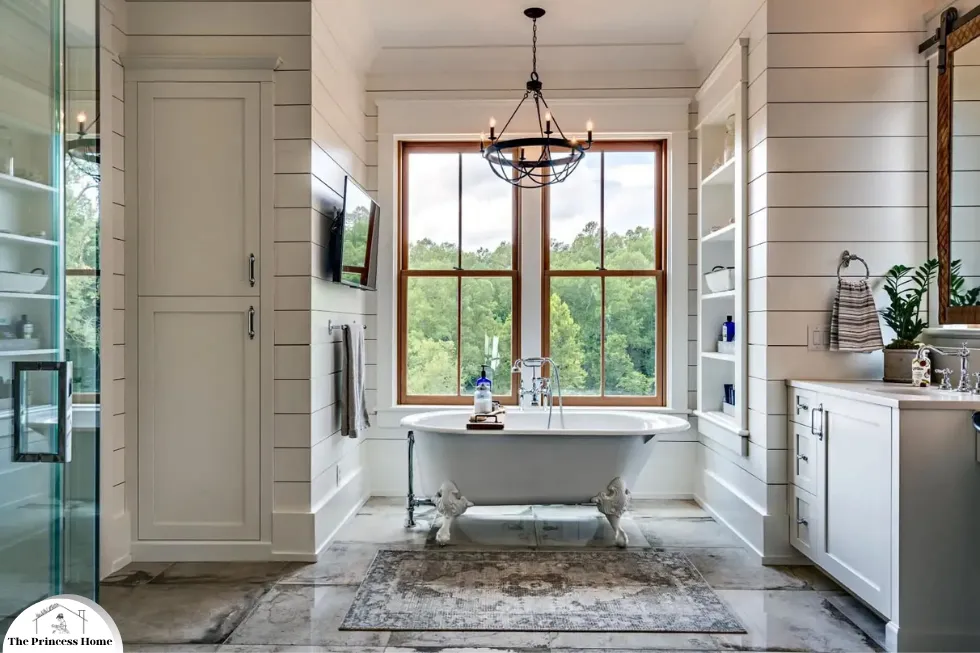
5**.Farmhouse Bathroom
Extend the farmhouse charm to your bathroom with features like a clawfoot bathtub, a vintage vanity with a farmhouse sink, and beadboard wainscoting. Incorporate exposed copper or brass fixtures to enhance the rustic appeal. A farmhouse bathroom typically features a cozy and rustic aesthetic, inspired by traditional farmhouses and rural settings.
Here are some common elements and design ideas you might find in a farmhouse bathroom:
1.Natural Materials:
Incorporate natural materials such as wood, stone, and reclaimed materials for a rustic look. Exposed wood beams or shiplap walls can add character.
2.Neutral Color Palette:
Stick to a neutral color palette with earthy tones such as whites, creams, beiges, and soft grays. These colors contribute to a serene and calming atmosphere.
3.Vintage Fixtures:
Opt for vintage or antique fixtures like clawfoot tubs, pedestal sinks, or trough sinks. Distressed or weathered finishes can enhance the rustic charm.
4.Farmhouse Sink:
A farmhouse sink, also known as an apron-front sink, is a classic feature in farmhouse-style bathrooms. It adds a touch of nostalgia and practicality.
5.Freestanding Bathtub:
Install a freestanding bathtub for a focal point in the room. Clawfoot tubs are particularly popular in farmhouse bathrooms, but you can also choose a more modern freestanding design with a vintage flair.
6.Shiplap Walls:
Consider using shiplap or beadboard paneling on the walls to create a rustic and textured look. You can paint it white for a clean and classic farmhouse style or leave it natural for a more rustic vibe.
7.Barn Door:
Replace a traditional door with a sliding barn door to save space and add a touch of rustic charm. Barn doors can be made from reclaimed wood or feature a distressed finish.
8.Vintage Accessories:
Add vintage accessories like mason jar sconces, wrought iron towel racks, or antique mirrors to enhance the farmhouse theme.
9.Warm Lighting:
Choose warm and soft lighting fixtures such as pendant lights, wall sconces, or lanterns to create a cozy ambiance.
10.Natural Textures:
Incorporate natural textures like woven baskets, cotton rugs, and linen curtains to add warmth and coziness to the space.
11.Greenery:
Bring the outdoors in with potted plants or fresh flowers to add a pop of color and freshness to the room.
12.Functional Storage:
Utilize baskets, crates, or open shelving for storage to keep with the farmhouse aesthetic while also providing functionality.
Remember, the key to achieving a farmhouse bathroom is to create a cozy and inviting space with a mix of vintage elements.
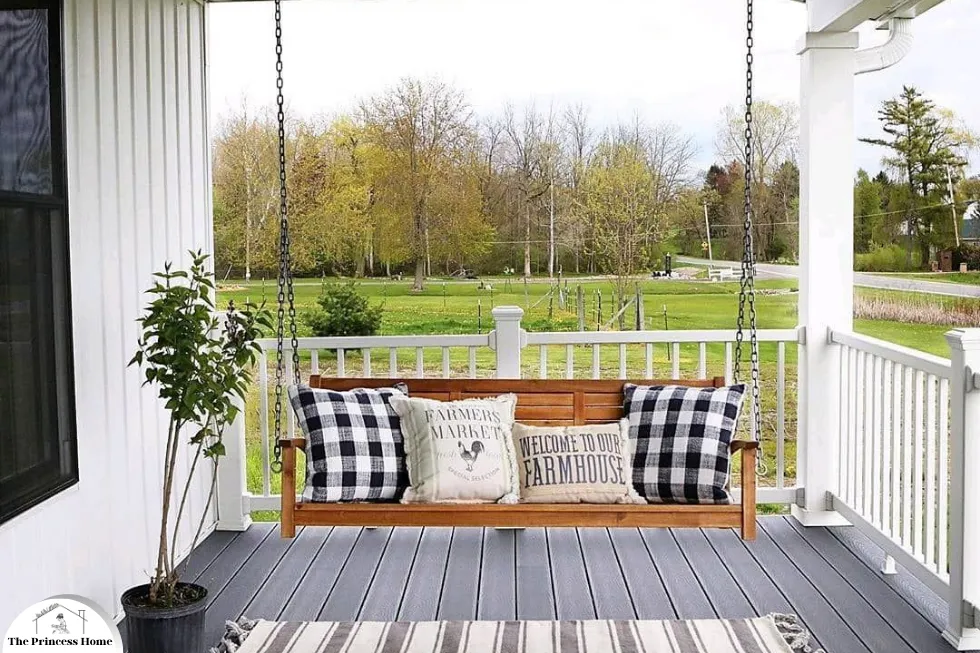
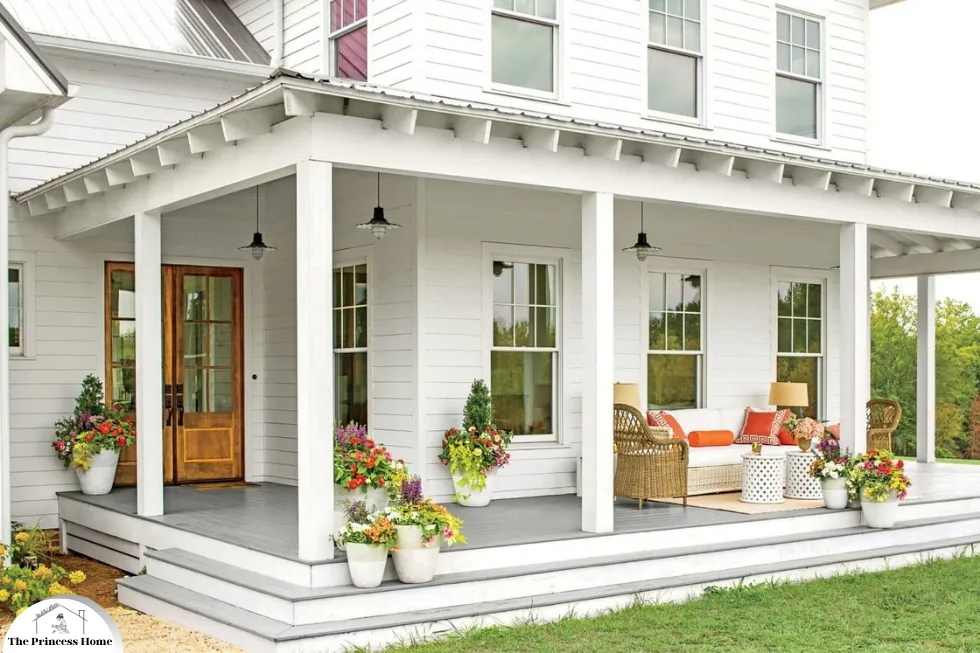
6**.Farmhouse Exterior
Don’t forget the exterior of your home when embracing the farmhouse style. Incorporate elements such as a front porch with a swing, white picket fencing, and window shutters to create an inviting farmhouse facade. A farmhouse exterior typically evokes a sense of charm, warmth, and simplicity, reflecting the traditional style of rural farmhouses.
Here are some key features and design elements commonly found in farmhouse exteriors:
1.Classic Silhouette:
Farmhouse exteriors often have a simple, rectangular or square shape with a pitched roof. The roof may feature gables, dormers, or a combination of both for added architectural interest.
2.Wraparound Porch:
A spacious wraparound porch is a hallmark of farmhouse architecture. It provides ample space for outdoor living, relaxing, and socializing with family and friends. The porch may be adorned with rocking chairs, porch swings, and potted plants.
3.Board and Batten Siding:
Board and batten siding is a popular choice for farmhouse exteriors. This siding style consists of wide vertical boards (boards) with narrower strips (battens) covering the seams. It creates a charming, rustic look that complements the farmhouse aesthetic.
4.Metal Roof:
Metal roofing is a common feature of farmhouse exteriors due to its durability and traditional appeal. Corrugated metal or standing seam metal roofs are popular choices, offering a distinctive look that adds to the farmhouse charm.
5.Neutral Color Palette:
Farmhouse exteriors typically feature a neutral color palette with shades of white, cream, beige, gray, or soft pastels. These colors evoke a sense of simplicity, timelessness, and tranquility.
6.Quaint Windows:
Windows play a key role in farmhouse exteriors, providing natural light and ventilation while enhancing the home’s architectural style. Common window styles include double-hung, casement, and multi-pane windows with shutters for a traditional touch.
7.Gable Roofs and Dormers:
Gable roofs with symmetrical gables and dormers are characteristic features of farmhouse exteriors. Dormers not only add visual interest to the roofline but also create additional space and light in the upper floors of the home.
8.Barn-inspired Details:
Farmhouse exteriors often incorporate barn-inspired details such as sliding barn doors, barn-style light fixtures, and rustic hardware. These elements add a nostalgic charm and connect the home to its rural roots.
9.Functional Outbuildings:
In addition to the main house, farmhouse properties may include functional outbuildings such as barns, sheds, or workshops. These structures contribute to the overall farmhouse aesthetic and provide practical space for storage, livestock, or hobbies.
10.Lush Landscaping:
A farmhouse exterior is often complemented by lush landscaping with manicured lawns, perennial gardens, and mature trees. Consider adding flower beds, vegetable gardens, and gravel pathways to enhance the natural beauty of the property.
By incorporating these design elements, you can create a farmhouse exterior that exudes charm.
7**.Mixing Modern and Farmhouse
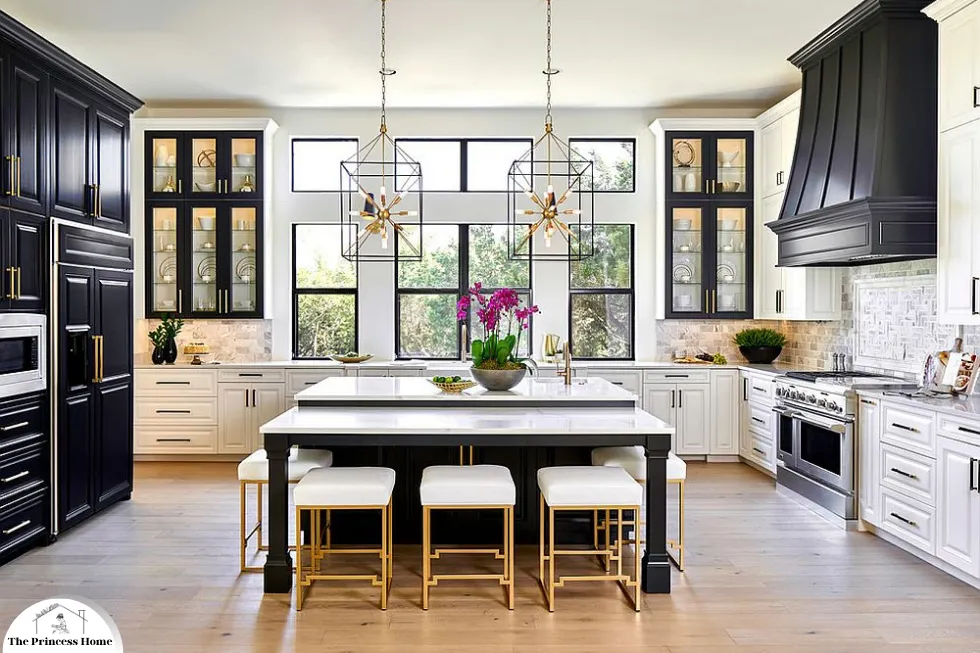
If you love the farmhouse style but also appreciate some modern elements, you can create a blend of the two. Consider using sleek, stainless steel appliances in the kitchen and incorporating contemporary light fixtures. Balance modern elements with rustic accents, like exposed wooden beams or shiplap walls.
This fusion of styles, often referred to as “modern farmhouse,” can result in a visually appealing and comfortable living space. Mixing modern and farmhouse styles can create a unique and inviting space that balances contemporary aesthetics with rustic charm.
Here are some ways to blend these two styles seamlessly:
1.Neutral Color Palette:
Start with a neutral color palette as the foundation for the room. Opt for shades of white, cream, beige, and soft gray to create a timeless backdrop that complements both modern and farmhouse elements.
2.Clean Lines:
Incorporate modern furniture and decor pieces with clean lines and minimalist designs. This could include sleek sofas, geometric coffee tables, and streamlined lighting fixtures to add a contemporary touch to the space.
3.Natural Materials:
Introduce natural materials such as wood, stone, and metal to infuse the farmhouse warmth into the modern setting. Use reclaimed wood accents, stone countertops, and metal hardware to add texture and visual interest to the room.
4.Mix of Textures:
Layer different textures to create depth and dimension in the space. Combine smooth surfaces like glass and polished metals with rougher textures such as distressed wood and woven fabrics to achieve a balanced and eclectic look.
5.Statement Pieces:
Incorporate statement pieces that blend both modern and farmhouse styles seamlessly. This could be a vintage-inspired rug with a contemporary color palette, a sculptural light fixture with rustic elements, or a mid-century modern chair paired with a reclaimed wood side table.
6.Open Floor Plan:
If possible, create an open floor plan that allows for seamless flow between the modern and farmhouse-inspired areas. This can help unify the space while allowing each style to shine in its own right.
7.Mixed Metal Finishes:
Don’t be afraid to mix different metal finishes such as brass, chrome, and blackened steel to add visual interest and personality to the room. Mixing metals adds a contemporary flair while embracing the eclectic nature of farmhouse style.
8.Vintage Accents:
Incorporate vintage or antique accents to bring a sense of history and character to the space. Look for vintage artwork, old books, or antique accessories that complement the modern furnishings while adding a touch of farmhouse charm.
9.Indoor Greenery:
Bring the outdoors in with houseplants and fresh flowers to add life and vibrancy to the space. Choose modern planters or decorative vases with clean lines to complement the contemporary aesthetic while adding a touch of nature to the room.
10.Personal Touches:
Lastly, don’t forget to add personal touches that reflect your own style and personality. Whether it’s family photos, travel souvenirs, or handmade artwork, these personal elements can help tie together the modern and farmhouse elements in your space.
By incorporating these design ideas, you can create a cohesive and inviting space that seamlessly blends modern sophistication with farmhouse charm.
8**.Farmhouse Accessories
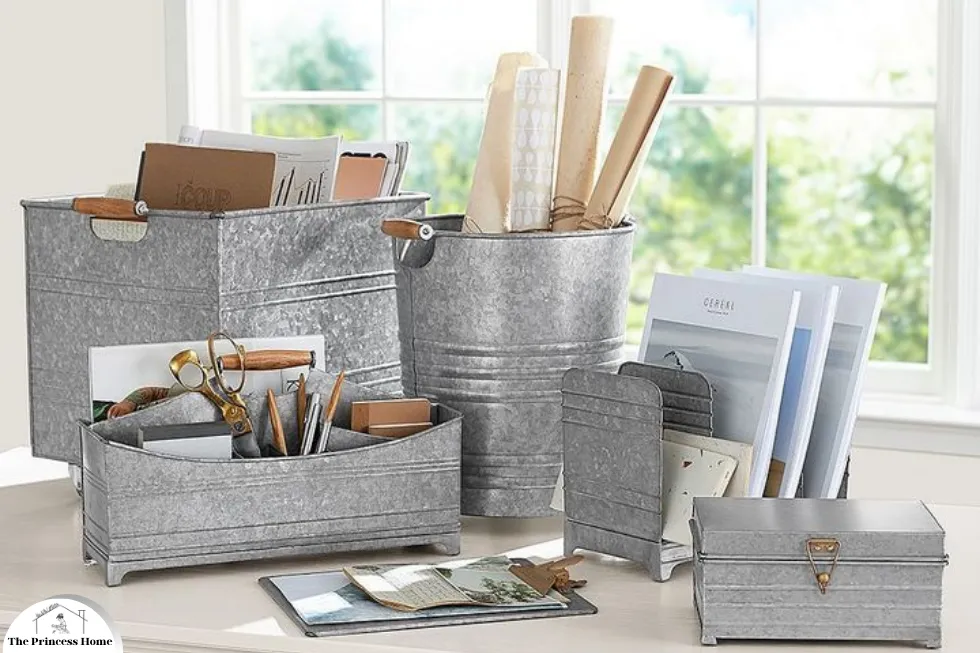
Accessories are essential for fine-tuning the farmhouse style. Look for vintage or vintage-inspired items like mason jar drinking glasses, wire baskets, and old books for decorating shelves and tabletops. Antique clocks, vintage fans, and ornate mirrors can also add character to your space. You can often find these items at thrift stores, flea markets, and antique shops.
9**.Maintenance and Care
To maintain the farmhouse style’s authenticity and charm, it’s essential to care for the distressed finishes, wooden furniture, and other vintage elements. Regularly dust and clean surfaces to prevent the buildup of dirt and grime. Additionally, be mindful of any potential wear and tear on antique pieces and consider furniture restoration if necessary.
Conclusion
Incorporating the farmhouse into your home is a wonderful way to create a warm and welcoming environment that exudes timeless charm and comfort.
Certainly! Here are some frequently asked questions related to achieving a farmhouse :
Q1: What is the farmhouse style in home decor?
A1: Farmhouse style in home decor is a design trend that takes inspiration from traditional farmhouses. It typically features a blend of rustic and vintage elements, including reclaimed wood, shiplap walls, distressed furniture, and a neutral color palette. It often evokes a warm and cozy, yet simple and functional, atmosphere.
Q2: How can I achieve a farmhouse style in my home?
*A2: To achieve a farmhouse style in your home, consider the following:
- Use natural materials like wood and stone.
- Incorporate rustic and vintage furniture and decor.
- Opt for a neutral color scheme with white, beige, and gray tones.
- Include shiplap or beadboard wall paneling.
- Add open shelving with simple, functional kitchenware.
- Use vintage or distressed finishes on furniture and accessories.*
Q3: What colors are commonly used in farmhouse-style decor?
A3: Farmhouse decor often relies on a neutral color palette. Popular colors include white, beige, soft grays, and muted earthy tones. These colors create a light, airy, and timeless feel in your home.
Q4: What types of furniture work well in a farmhouse-style home?
A4: Farmhouse-style furniture tends to be rustic and simple. Consider using wooden tables, distressed or painted dressers, Windsor-style chairs, and farmhouse dining tables. Pieces with a vintage or antique look also work well in this style.
Q5: What are some key accessories for achieving the farmhouse style?
*A5: Farmhouse-style accessories can enhance the look. Some popular choices include:
- Mason jars and glass canisters for storage.
- Farmhouse sinks.
- Galvanized metal decor, such as buckets and trays.
- Woven baskets for storage.
- Vintage signs and artwork.
- Linen and cotton textiles, like grain sack pillows and simple curtains.*
Q6: Can I achieve a farmhouse style on a budget?
A6: Yes, you can achieve a farmhouse style on a budget. Look for affordable, second-hand furniture and decor at thrift stores, yard sales, or online marketplaces. DIY projects, like distressing furniture or creating your own shiplap wall, can also help you save money while achieving the look.
Q7: Can I mix farmhouse style with other design styles?
A7: Yes, farmhouse style can be mixed with other design styles. It’s versatile and can blend well with modern, industrial, or even coastal styles. The key is to find a balance between elements from different styles to create a harmonious and personalized look.
Q8: Are there any common mistakes to avoid when trying to achieve a farmhouse style?
A8: Yes, some common mistakes to avoid include overdecorating with farmhouse-themed items, using too many bold or bright colors, and neglecting to maintain a sense of simplicity and functionality. Make sure your farmhouse style doesn’t become too cluttered or overly rustic.
Q9: Where can I find inspiration for farmhouse-style home decor?
A9: You can find inspiration for farmhouse-style home decor in various places, including home decor magazines, Pinterest, Instagram, and interior design websites. Additionally, visiting real farmhouses or attending home decor shows can provide firsthand inspiration.
Q10: Can I achieve a farmhouse style in a small space?
A10: Yes, you can achieve a farmhouse style in a small space. Use light colors to make the space feel larger, incorporate multi-functional furniture, and opt for open shelving and storage solutions to maximize your space while maintaining the farmhouse aesthetic.